
Destructive Effects of Generative AI: Perspectives Against AI Power
Contemporary violence is linked to the expanded reach of harm facilitated by AI. This roundtable discussed the destructive effects of generative technologies, and how technologies that generate value for state and corporate power rely upon practices of degradation, decline, and even the decimation of lives and lived worlds. At the Association of Internet Researchers Annual Conference (2026) in Mexico City, Sahana Udupa organized a roundtable on AI violence and took part in a discussion with fellow panelists Kaarina Nikunen, Marcelo Santos Jr, Maiel Garćia-Montes and David Widder. Special thanks to Paola Ricaurte for supporting the event.
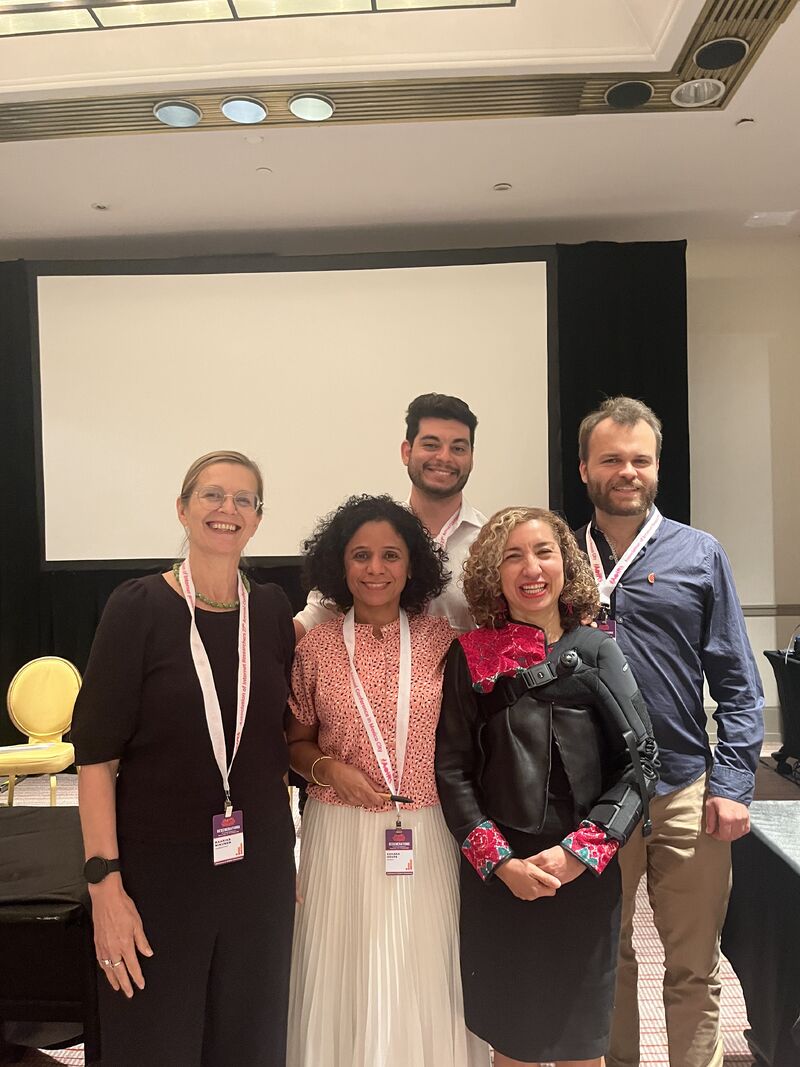
Contemporary violence is linked to the expanded reach of harm facilitated by AI. This roundtable discussed the destructive effects of generative technologies, and how technologies that generate value for state and corporate power rely upon practices of degradation, decline, and even the decimation of lives and lived worlds. To examine this structural cruelty, speakers will draw attention to five distinct fields in which AI, the latest phase of technological advancement, has become the new condition for operations of power. As a war machine, AI is enabling automated drone attacks, data-driven targeted killings, and sensor-to-shooter machine learning infrastructures. As an epistemic assemblage, academic knowledge is implicated in this emerging technology-led regime of warfare. As is evident in the US, the project of AI has tied the academy and the military closer together, using grant funding to enrol academics into warfighting agendas. As a degradation mechanism, generative AI conversational chatbots are squarely at the center of new assaults on trust, safety, and dignity in online communication. The MechaHitler declaration and nude images spewed out by the Elon Musk-owned Grok model highlight a new phase of machine-enabled extreme speech. As a surveillance system, AI is the new agent to control borders and send back, detain or place unwanted migrants in a state of anxious waiting. Migration management and border practices in Europe, for instance, have developed rapidly with the introduction of artificial intelligence and various ‘smart’ technologies, including facial recognition systems, retinal scans, speech detection systems, and surveillance drones. As an instrument of algorithmic plutocracy, AI fosters monopolization, enables predatory forms of resource extraction, and systematically marginalizes the Majority World. How then do we hold AI power accountable and forge people-centric values of ethical scaling for regeneration? How can we reassert collective agency to constrain AI’s destructive externalities and align development with planetary limits?