
Skip to content
Center for Digital Dignity

UDUPA, S. & WASSERMAN, H. (2025) WHATSAPP IN THE WORLD: DISINFORMATION, ENCRYPTION, AND EXTREME SPEECH

WhatsApp in the World (New York University Press) offers a global analysis of the vastly popular encrypted instant messaging service. Rather than taking the technical feature of “encryption” at face value, the volume proposes the conceptual framework of “lived encryptions” to highlight the different, often contradictory, formations around encrypted messaging, as evidenced in the way the promised confidentiality of encrypted messaging is upturned completely when surveilling states seize the phones from suspected dissenters to download the data, or how seemingly closed group communication is channelized to “broadcast” top-down political messages. Click here to download the book.
Related resources

UDUPA, S.(2026) PROMPT ETHNOGRAPHY: CRITICAL METHODOLOGY FOR GENERATIVE AI

UDUPA, S.(2026) PROMPT ETHNOGRAPHY: CRITICAL METHODOLOGY FOR GENERATIVE AI

This chapter develops “prompt ethnography” as a critical methodology to scrutinize generative AI. Prompt ethnography employs reflexive interactions with generative models and public controversies around model behaviors as empirical touchstones to draw inferences about why AI models say what they say about politically charged topics, and interrogate the larger structures of power that define the code, content and consternations undergirding model outputs. It is published in the Handbook of Anthropology and Artificial Intelligence (edited by Udupa S. & Hervik P., Edward Elgar)

UDUPA, S.(2026) PROMPT ETHNOGRAPHY: CRITICAL METHODOLOGY FOR GENERATIVE AI

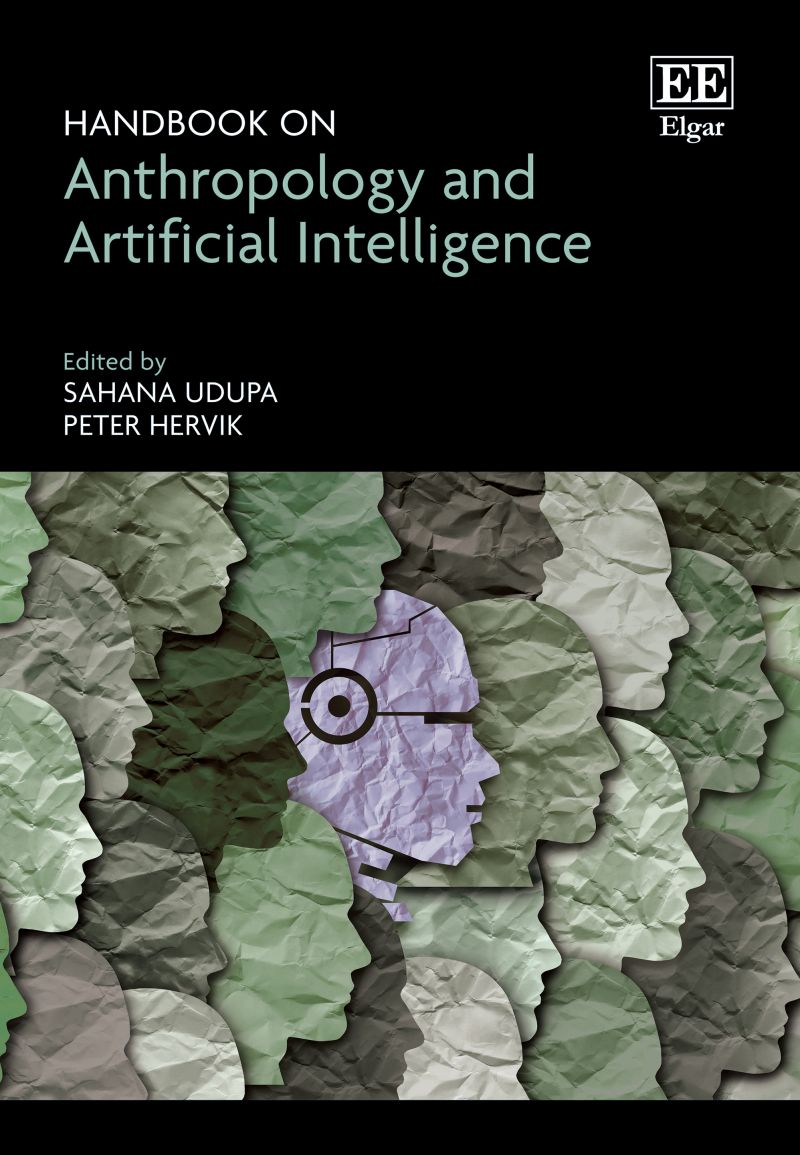
UDUPA, S. & HERVIK P. EDS. (2026) HANDBOOK ON ANTHROPOLOGY AND ARTIFICIAL INTELLIGENCE

Featuring 33 chapters and the editors’ introduction, this Handbook provides a groundbreaking collection of anthropological research on artificial intelligence (AI), examining how anthropology can help to comprehend and critique its development. Evaluating the limits, hopes and fears of AI, leading experts explore its influence as a sociocultural phenomenon rather than a discrete technological system.