
Skip to content
Center for Digital Dignity

GOVENDEN, P. & MWAURA, J. (2024) DECOLONISING THE INTERNET IN AFRICA: FOSTERING CULTURAL INCLUSIVITY IN THE ERA OF 4IR

In this contribution to a special issue on decolonising the internet, the authors explore how digital technologies in Africa can either reinforce colonial legacies or become tools for cultural inclusion and empowerment. Grounded in decolonial theory, the article highlights the importance of African languages, knowledge systems, and governance models in shaping a more equitable digital landscape amid the Fourth Industrial Revolution. By centering African epistemologies, the piece offers both critical insights and actionable pathways for building a culturally inclusive internet that reflects and serves the continent’s diverse realities.
Related resources

UDUPA, S.(2026) PROMPT ETHNOGRAPHY: CRITICAL METHODOLOGY FOR GENERATIVE AI

UDUPA, S.(2026) PROMPT ETHNOGRAPHY: CRITICAL METHODOLOGY FOR GENERATIVE AI

This chapter develops “prompt ethnography” as a critical methodology to scrutinize generative AI. Prompt ethnography employs reflexive interactions with generative models and public controversies around model behaviors as empirical touchstones to draw inferences about why AI models say what they say about politically charged topics, and interrogate the larger structures of power that define the code, content and consternations undergirding model outputs. It is published in the Handbook of Anthropology and Artificial Intelligence (edited by Udupa S. & Hervik P., Edward Elgar)

UDUPA, S.(2026) PROMPT ETHNOGRAPHY: CRITICAL METHODOLOGY FOR GENERATIVE AI

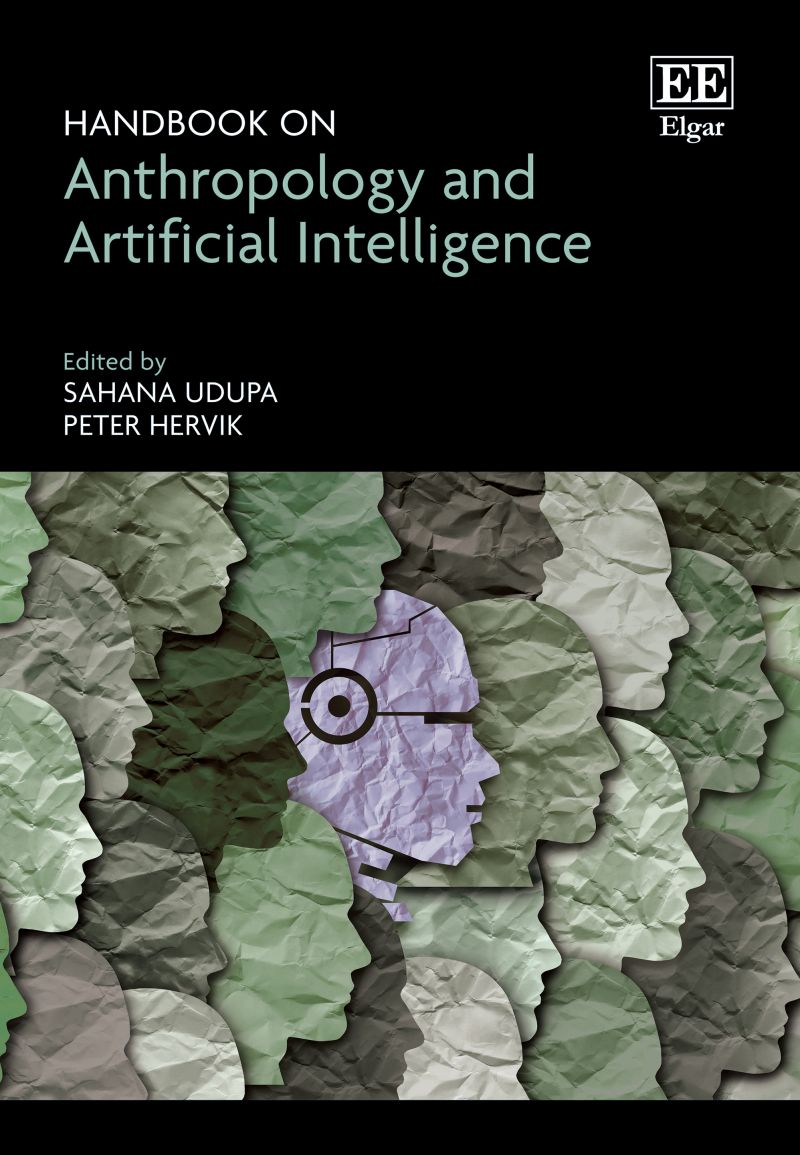
UDUPA, S. & HERVIK P. EDS. (2026) HANDBOOK ON ANTHROPOLOGY AND ARTIFICIAL INTELLIGENCE

Featuring 33 chapters and the editors’ introduction, this Handbook provides a groundbreaking collection of anthropological research on artificial intelligence (AI), examining how anthropology can help to comprehend and critique its development. Evaluating the limits, hopes and fears of AI, leading experts explore its influence as a sociocultural phenomenon rather than a discrete technological system.